Saturday, January 10, 2015

A quote for my muslim friends (after the "Charlie Hebdo" assassinations in Paris)

"Do not let yourselves provoke now! ... The devastating of this terrible attack was (also) that it perverted the sides: It has changed the Muslims from the position of the victim to the one of the perpetrators and brought the French journal from the attacker to the victim." The magazine Charlie Hebdo of course has deliberately offended Muslims with the publication of cartoons depicting the prophet and of course it was appropriate that the Muslims would defend their prophet, but: "This must however be done with wisdom and understanding!"

Mohammed Mokhtar Gomaa, the Egyptian Minister of Religious Endowments, preached at the friday prayer (9th January 2015) of the Sultan Hasan Mosque in Cairo.

Source: German weekly newspaper "Die Zeit" 

Unfortunately most German media did not report much about Merabet Ahmed, the French policeman who was murdered by the unscrupulous assassins on Wednesday in Paris. Merabet was injured in the street near the editorial office of "Charlie Hebdo", as one of the hooded perpetrators approached him and without hesitation shot in the head killing him. Merabet was a Muslim. The Muslim activist Dyab Abou Jajah wrote Thursday on Twitter: "I'm not Charlie, I'm Ahmed, the dead policeman. Charlie Hebdo was making fun of my faith and culture, and I died for his right to do that."

Monday, December 22, 2014

The silence of the world before BACH


Die Stille der Welt vor Bach

Es muss eine Welt gegeben haben vor
der Triosonate in D, eine Welt vor der a-moll-Partita,
aber was war das für eine Welt?
Ein Europa der großen leeren Räume ohne Widerhall
voll von unwissenden Instrumenten,
wo das Musikalische Opfer und das Wohltemperierte Klavier
noch über keine Klaviatur gegangen sind.
Einsam gelegene Kirchen,
in denen nie die Sopranstimme der Matthäuspassion
sich in hilfloser Liebe um die sanfteren
Bewegungen der Flöte gerankt hat,
wie sanfte Landschaften,
wo nichts zu hören ist als die Äxte alter Holzfäller,
das muntere Bellen starker Hunde im Winter
und Schlittschuhe auf blankem Eis wie ferne Glocken;
die Schwalben, die durch die Sommerluft schwirren,
die Muschel, in die das Kind hineinhorcht,
und nirgends Bach, nirgends Bach.
Die Schlittschuhstille der Welt vor Bach. 


(LARS GUSTAFSSON, dt. V. Reichel)

Wednesday, November 26, 2014

(get) the OVERLOOK (hotel) ...

 
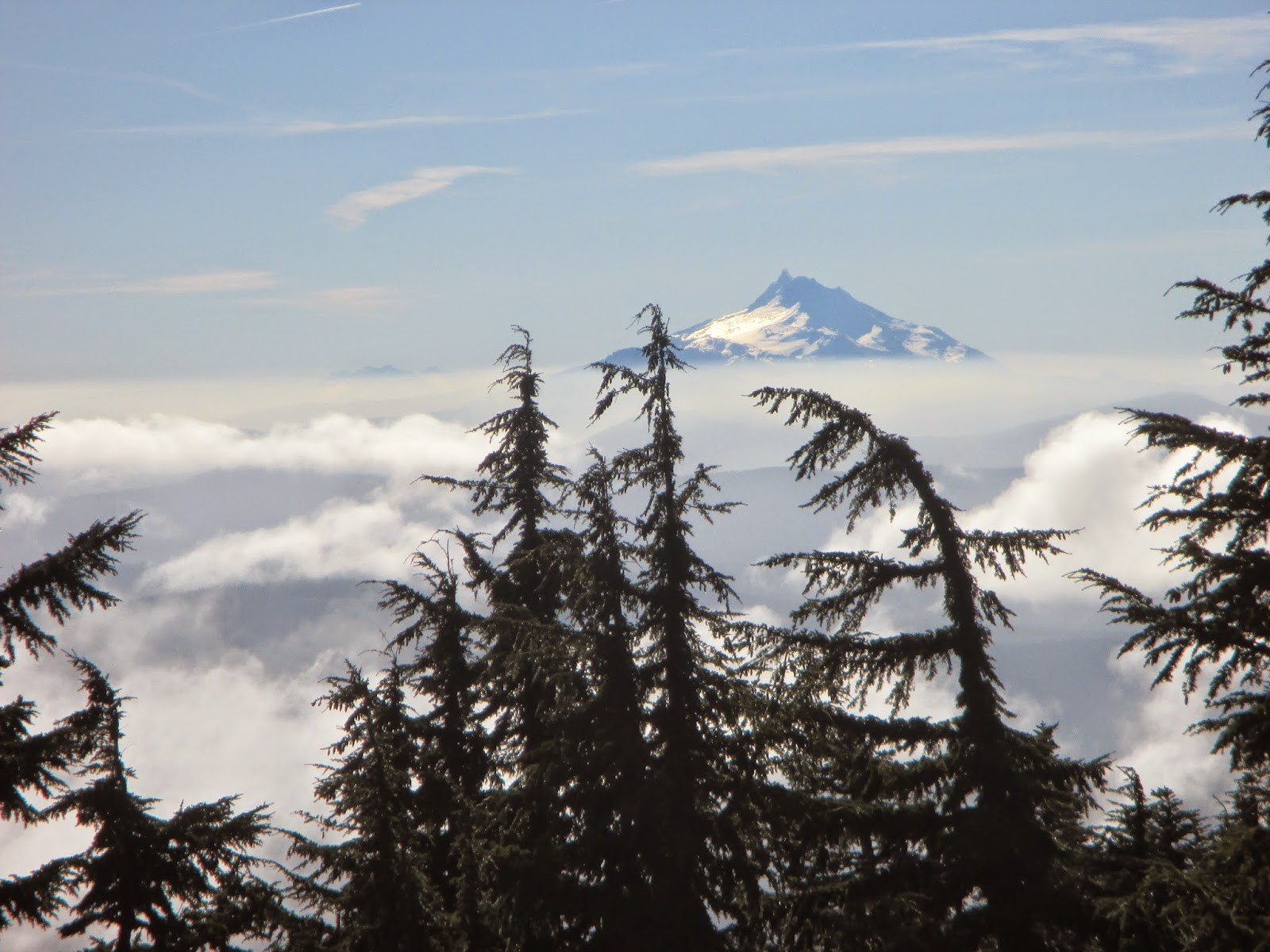
If you drive for about one hour south east of Portland (Oregon), the road starts rising up to hills. The trees will become bigger and the hills turn into giant grey rocks hiding the blank sky. Then it is time to enter the steep slim side road to the left up to the top of a blinding white cone shimmering in the the strong sunlight of a clear autumn day.   

When you finally arrive over the clouds you will soon understand that you are standing on an old vulcano which is part of a chain called Cascadia. In the south you see Mt Jefferson, to the north there is Mt St Helens (last outbreak May 1980). And you are, somewhere inbetween, on Mt Hood. Welcomed by a raven who was waiting for you for a very long time.

And then you see something that seems very familiar to you although you could have never been here before. It does not look nice or friendly at all, so you start wondering why you feel so much at home on a place that you definitly have never been before. Its a giant wooden house, squatting on the stony side of the vulcano.


Not understanding how something absolutely new can feel so very well known you enter the entrance of this broad wooden building ...


It is a special spirit all around. 
A house haunted by people who never were here.


A photo of a new years night suddenly tells you why your memory believes you have been here before. You know this place from a movie. From a very special movie.

AND THEN YOU REMEMBER.

All work and no play makes Jack a dull boy.

 This is the place of the fictive fiction writer Jack Torrance. You never forgot him.

Welcome to the Overlook hotel.


You can check out any time you like. But you can never leave.

Wednesday, October 15, 2014

The day that changed Germany: Leipzig, 9th October 1989 (Why could the FALL OF THE BERLIN WALL happen?)

How to win a revolution without bloodshed...
East Germany 1989.

Why could the FALL OF THE BERLIN WALL happen?
(And why was everybody suprised about that?)

Video (BBC-Interview, Oct 2014).

Audio (BBC-Interview, extended version, Oct 2014). 

Novel (Rabet, Munich 1999).

History book (The day that changed Germany, Leipzig 2007).

Tuesday, October 14, 2014

RABET or How to win a Revolution without bloodshed (novel)


Thist novel about the peaceful revolution of soviet-occupied East-Germany in 1989 was originally published in 1999 in German language with the title: "Rabet oder das Verschwinden einer Himmelsrichtung - Rabet or The Disappearance of a Cardinal Point" (via verbis publishing, Munich). It was translated into Italian and Indonesian languages and partly also into Czech and English.

About the Novel: A German journalist narrates the events in Leipzig from 1987-1990 to his unknown daughter in New York.  Events which he has not talked about in years, absurd stories and the feeling of an era he thought long gone, begin to manifest themselves.  For the first time in German literature the story of the peaceful revolution is told from the perspective of a revolutionary.  The fictional characters exist in an authentic, historic background.  This novel hauntingly describes the interior dynamics of the events which began the German revolution, and the dreams, disenchantment and moments of joy lived by real-life protagonists.  Through this book, it becomes clear how truly these dynamics are still at work today.


Content: Benjamin Grasmann, an aspiring musician from the provinces, breaks out to the East German city of Leipzig.  While there, he falls in love and meets deeply inspirational artists of the Opposition.  He soon finds himself caught up in the opposition's conflicts with the socialist regime.  As small upheavals and demonstrations become commonplace, more and more of his friends are arrested.  The news of his lover's pregnancy arrives at the peak of political conflict, the struggle for supremacy grows inevitable, and not just Leipzig, but the whole of the GDR hangs in the balance.  And Benjamin Grasmann finds himself right in the middle.


Voices about the book:
“Martin Jankowski belongs to the most interesting voices of a new generation of East-German writers...” (Caroline Wyatt, BBC)

“We've had to wait ten years for this book!” (Thomas Meyer, Leipziger Volkszeitung)

“Rarely have the final scenes of East German history been described in such a realistic and at the same time hilarious manner.” (Wolfgang Engler, Sociologist, director of the Ernst Busch Actors School Berlin) 

"Very authentic ... describes how young people in particular in Leipzig fought against the system froze - and it finally brought to falter." (STERN Extra 4/2009, "Against the wall in the head")

“...one of the few novels in which the European dimension of the revolution is expressed... the representation of the split between those protesters willing to leave and those who wanted to stay is unique...it seems to be a legend of change – contrary to events. Jankowski is one of the few authors who makes not only critical, but ironic commentary." (Frank Thomas Grub, “Wende und Einheit im Spiegel der deutschsprachigen Literatur” 2003, de Gruyter Berlin – New York)

“Jankowski is making his way into German literature...” (Sabine Neubert, ND-Kultur)